If proper design and material selection are the first steps toward an effective and long-lasting waterproofing solution, then installation quality is the second most important step. Many people overlook installation quality challenges in favour of other project aspects, which increases the likelihood of errors and problems occurring and developing, affecting the installed waterproofing system’s ability to function properly.
The challenges in waterproofing installation begin with project specifications and installation details. Most architects, owners, contractors, consultants, or engineers would frequently respond on the general specifications and installation details provided by the waterproofing manufacturer to provide the project waterproofing installation plan. However, those specifics may not fully address site-specific geotechnical conditions, construction sequencing issues, local climate issues, installer skill level, and other project variables. The specifications and details of waterproofing manufacturers are typically validated through ASTM or CAN/CGSB (Canadian General Standards Board) laboratory tests and limited trial installations. They only address the bare minimum of material and application performance properties for the specific waterproofing, such as UV and weathering resistance, as well as hydrostatic pressure, elongation, flexibility, puncture/impact resistance, crack cycling, peel adhesion, and others, the majority of which are obtained under laboratory testing conditions.
Waterproofing manufacturer installation details are limited in scope and depict only the bare minimum of installation requirements for typical conditions. They are difficult to account for due to the wide range of site conditions, structure variations (such as unusual intersections and multiple penetrations), contractor means and methods, and in many cases, they would need to be modified to fit the purpose. It is also important to note that a default waterproofing warranty is not a guarantee of field performance, but rather an outline of what the waterproofing manufacturer is legally obligated to do if their system fails to perform when their standard specification and installation guidelines are followed. Contractors and subcontractors should be encouraged, if not required, to demonstrate their knowledge of the materials, products, and systems to be installed via the submittals process. The risk of system failure increases when people are not properly trained to install a specific assembly.
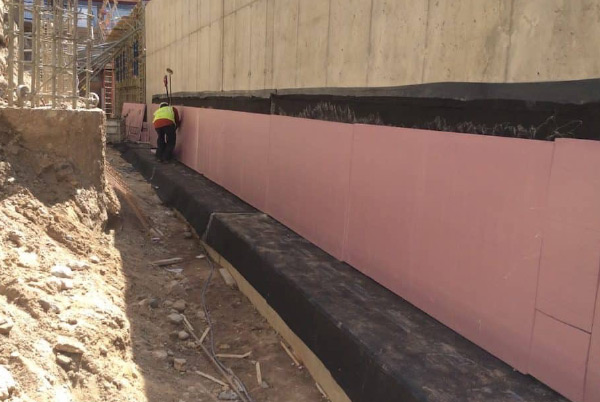
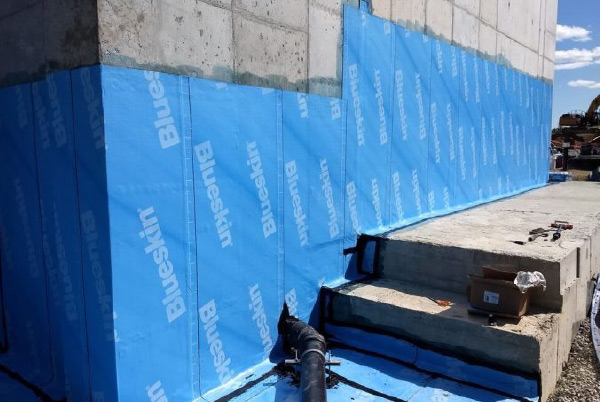
Every waterproofing project presents its own set of challenges and roadblocks to a successful installation. Waterproofing can be difficult to access during construction and even more so afterward (during the system’s service life or during restoration/replacement work). Blindside (or pre-applied before the concrete is poured) waterproofing systems for difficult-to-access areas increase the potential for waterproofing breaches and amplify the consequences if they occur. The type of waterproofing and its installation may be dictated by site conditions, which may necessitate narrow, deep trenches. Careless backfilling is a major cause of waterproofing failure, as is heavy equipment damage. Poor substrate selection may result in dimpling of the waterproofing membrane, resulting in numerous weakened areas that are more vulnerable to puncture failures, and installing waterproofing systems without properly preparing the substrate will result in installation errors. When the substrate to which they will be applied is combustible, or when nearby structures, openings, or materials present a fire hazard, self-adhering or adhesive-applied materials should be considered as alternatives to torch-applied membranes. As an alternative to open flame protection, a suitable separation or overlay material is suitable.
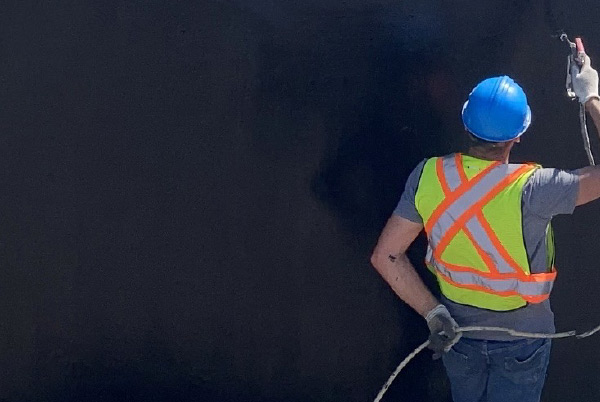
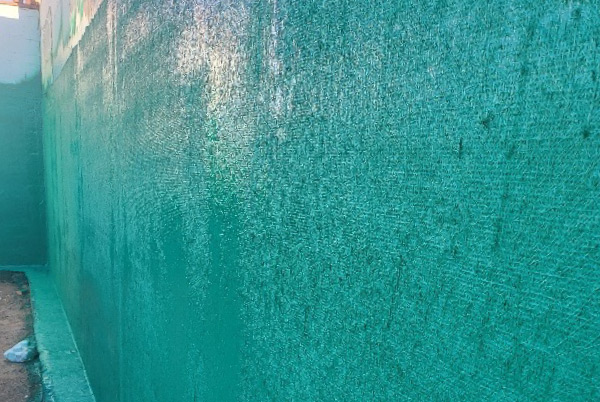
Other common installation errors that may be observed during construction include, but are not limited to: applying fluid-applied waterproofing products without adhering to its application climate temperature limitations (for example, the feasibility of applying waterproofing coatings below temperatures of 40°F (4°C) is a common question); Incorrectly applying adhesives or primers for self-adhered systems; Applying the self-adhered membrane before the primers being ready; Seams and penetrations that are wholly or improperly sealed; Installing waterproofing systems that are not per the project specifications/details.