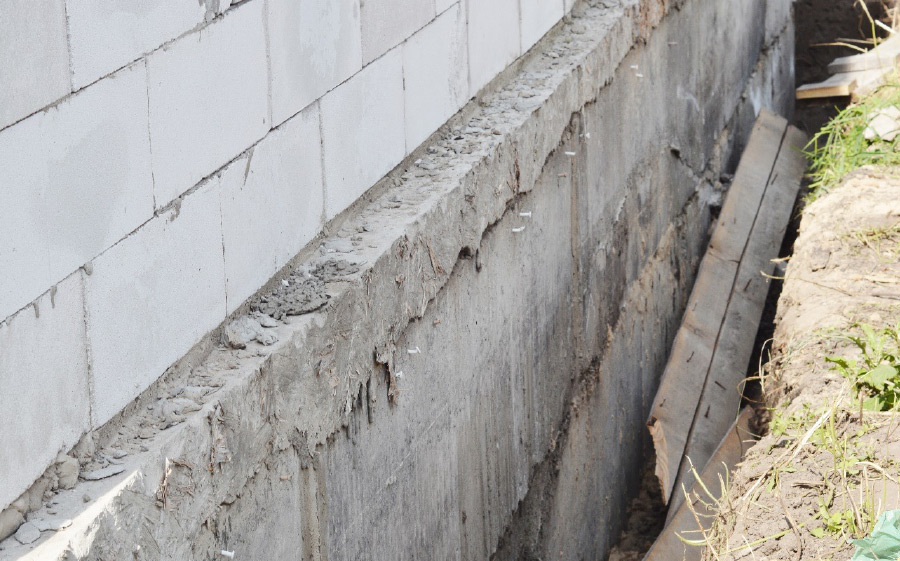
Because no products or systems have simultaneously combatted and eliminated all the root causes or failure no brand has been able to get their offering an insurance backed warranty… until Hulk Systems that is. Any one of these threats listed below, in the eyes of an insurance company, is simply too much risk and liability. This list comes directly from an insurance industry risk management assessment on the volatility of foundation waterproofing system in todays market.
1. Water access through penetrations, such as seams and joints
Seemingly all waterproofing systems aside from fluid applied membranes or bituminous layers like tar or rubber suffer from having joints, seams, or penetrations. Because of the amount of pressure applied on the positive pressure side of a foundation, between the soil load and ground moisture content, the smallest of openings is capable of causing major problems. These penetrations can also be caused from hardware like fasteners putting holes in the system, or rips and tears experienced during backfill. Sagging of sheet membranes during backfill and general delamination in non-ideal conditions or when poorly bonded to its surface material, can also cause many access points to be exposed. These all become roadways for hydrostatic pressure to expose and erode over time, often creating water-pockets that are trapped behind the waterproofing system and the concrete, causing long-delays in the evaporation of moisture to occur.
2. Improper Installation
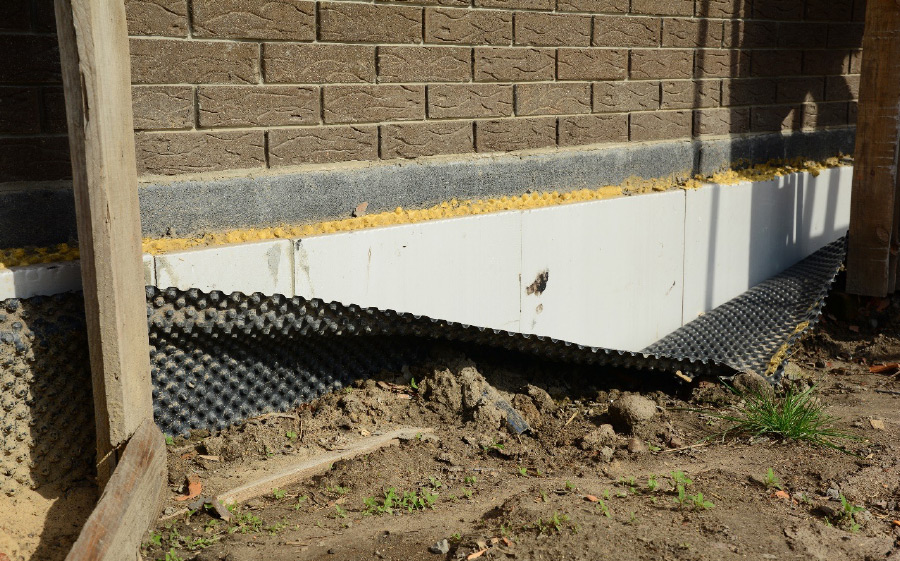
The second leading cause in failures is the improper installation of the waterproofing system by the applicators. On many accounts, projects are rushed, and application recommendations, instructions, or guidelines are completely forgotten, ignored or outright disregarded. Failure to prep the surface, failure to comply to weather, environmental and temperature constraints, failure to apply the correct thickness of liquid product, failure to use the correct adhesives or primers, failure to apply the number of coats directed, failure to install the recommended protection board or drainage wrap in front of the system, failure to complete details as directed, failure to backfill on time or too early; these are the leading applicator failures.
3. Inability to Endure Abuse
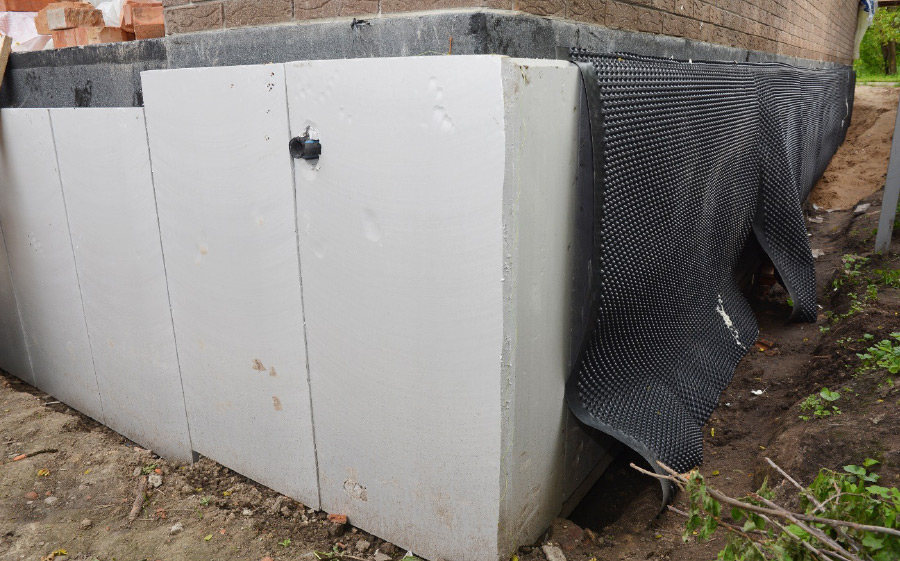
The products made to endure the highest abuse like a protective board or drainage matt (plastic dimple sheet) are the same products that require fasteners, which unfortunately causes a worse problem as a result (see leading cause of failures #1). The cementitious, fluid applied membranes, bituminous coatings, clay systems, and sheet membranes (peel n’ sticks) are often not durable enough to endure much abuse at all, whether it be abrasion, impact, or even high winds. Often the effects on these systems during backfilling and settling can cause a greater problem then if the wall had zero protection, which is displaced water pressure and access, with pockets of water sometimes being held against the foundation, trapped by the failed waterproofing system.
4. High Water Absorption
Many products advertised on the market are water dampeners not water-proofers. Water dampening or water-resistant products like tar or rubber, are meant to repel water for a period. Many acrylic products are the same. That is why permeability, water absorption, submersion and hydrostatic pressure testing is pivotal. Many products on the market are like sponges. Tiny cavities on a microscopic level allow water to pass through and access the substrate behind them. Over time, the products become waterlogged, and after enough freeze/thaw cycles, nearly all the original performance attributes are lost.
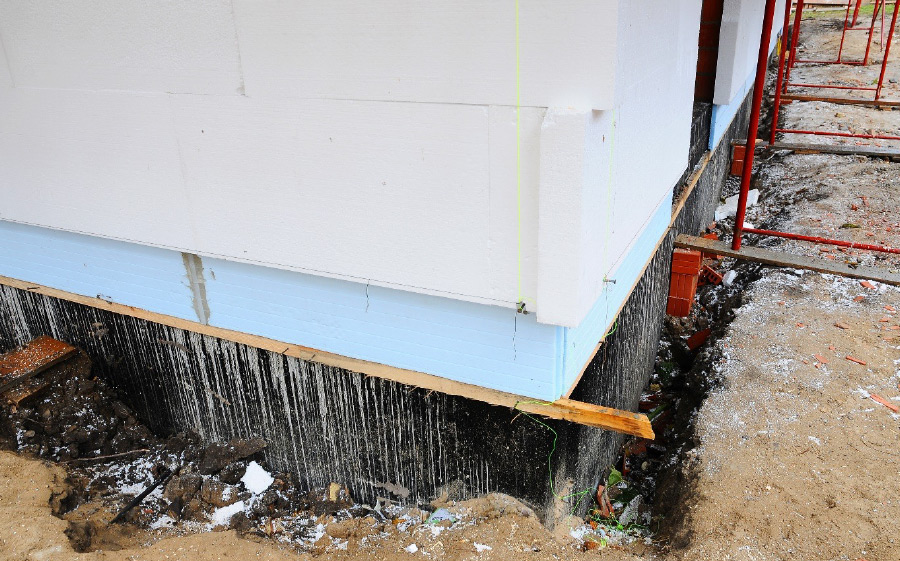
5. Degradation by Weather, UV, or Soil Conditions
When you excavate a foundation wall to expose a waterproofing system, experts will tell you this is when you really witness the success or failure of any given system. Most all sheet membranes, cementitious coatings, and bituminous coatings will have completely lost adhesion to the foundation, easily coming off with the soil. Most coatings will be a fraction of the thickness they were originally applied at, ridden with cracks and pinholes. Very few products successfully stand this test of time and rely solely on the positive pressure to keep them against your foundation. This is usually caused by eventual failure to withstand the conditions of UV (before backfilling), or soil pollutants like acid and salts, or simply because the force of the groundwater broke its bond from the concrete. Other forms of degradation can be caused by fungi, mold, bacteria, and vermin.