A waterproofing system’s proper design and material selection are critical because remedial waterproofing solutions can be prohibitively expensive. Getting it right the first time is critical. During the design phase of any waterproofing solution project, the following factors must be considered:
External Waterproofing:
External waterproofing employs waterproofing components applied to the concrete’s surface on either the positive or negative side. Water is prevented from entering the surface by applying positive side waterproofing to the side of applied hydrostatic pressure (eg: the exterior surface of the concrete). The negative side waterproofing protects the surface opposite the side of applied hydrostatic pressure (eg: the interior surface of a concrete wall), directing water after it enters the substrate. Positive side systems are generally preferred over negative side applications due to their effectiveness, but they fall short regarding leak detection and remediation. Traditionally, waterproofing membranes are installed after the concrete has been placed.


Internal Waterproofing
Internal waterproofing, also known as integral waterproofing or waterproof concrete, is the process of incorporating a waterproofing component (such as admixtures) into the concrete during the batching process. Admixtures reduce the possibility of water ingress by reducing concrete permeability and drying shrinkage. Internal waterproofing has two advantages: low material costs and ease of application. However, it is generally only appropriate for water-retaining structures and less critical locations where soil conditions are not aggressive, and the consequences of water entry or flooding are not severe.
Blindside Waterproofing
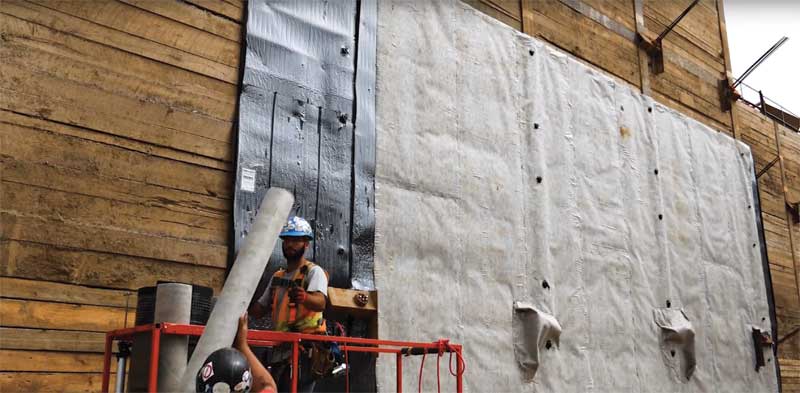
Blindside waterproofing, or the installation of waterproofing membranes and drainage before the concrete is poured, cannot be inspected once the concrete is poured and poses a significant risk in the membrane installation. Furthermore, highly skilled labour is required to apply the waterproofing membranes after the concrete has cured in dry weather. Surfaces must be prepared appropriately, and the installation must be near-flawless.
Traditional surface-applied waterproofing is susceptible to damage and deteriorates over time, even when installed perfectly. As a result, the waterproofing membrane must be highly resistant to damage and deterioration, including UV resistance, weatherability, fire resistance, and long-term durability.